



Down or feathers: what’s the difference?
Down provides light, fluffy warmth, whilst feathers offer more support. We’ll show you which filling is best suited to your Duvet and Pillows.
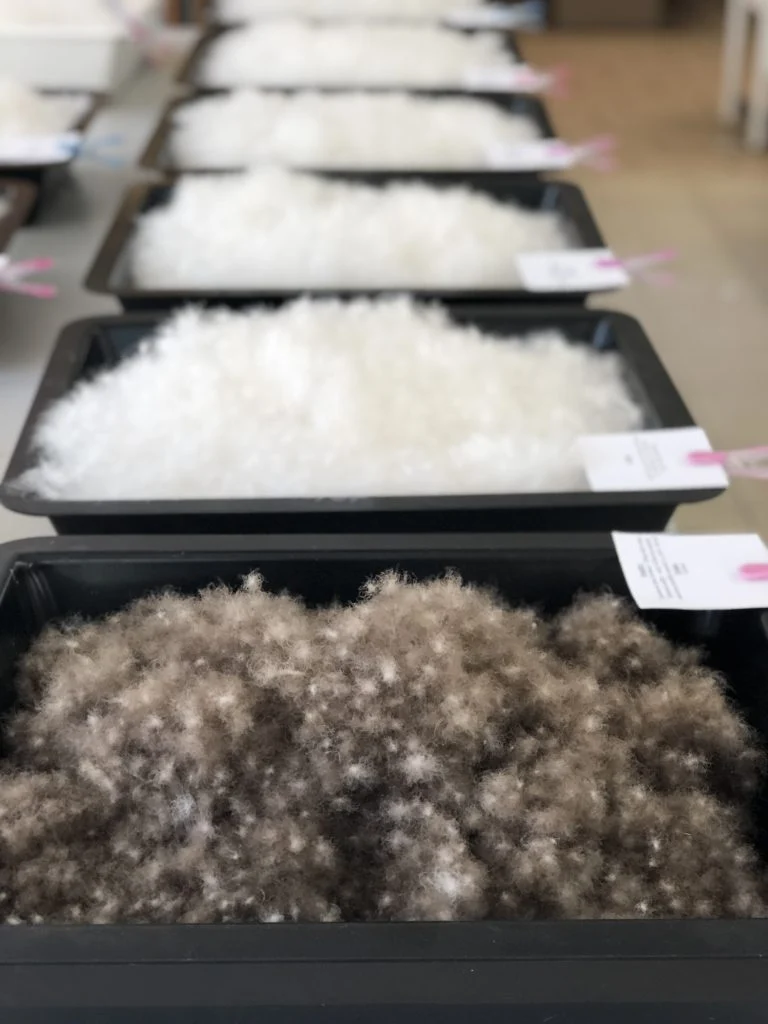
What is down and where does it come from?
Down consists of the soft underfeathers of waterfowl such as geese and ducks. It comprises a small core with fine, branched filaments and has no solid quill shaft. Air is trapped between these branches – this is what gives it its insulating effect. Down does not generate heat itself. The trapped air slows down the loss of your body heat.
Is down actually made up of feathers?
Biologically speaking, down is a type of feather. In bedding, however, down and feathers are referred to as different types of filling. The term ‘feathers’ refers to the firmer components with a distinct quill; down does not have this firm shaft.
How can you tell the difference?
Down lies beneath the visible plumage. Its fine, branched fibres trap a lot of air and form a light, fluffy filling. Feathers have a quill and a flatter shape. They are generally heavier and provide pillows with more firmness. Both can be of high quality; the filling must be suitable for its intended purpose.
| Property | Down | Springs |
|---|---|---|
| Structure | A soft, branched structure without a firm keel | Flat structure with a keel |
| Heat | High insulating capacity combined with low weight | Lower structural strength for the same weight |
| Feeling | Soft and supple | More firm and supportive |
| Typical application | Duvets and soft pillowcases | Supportive cushion fillings or internal chambers |
The table describes typical characteristics. The actual feel of the product also depends on the fill weight, cover fabric, chamber construction and blend.
What kind of filling goes with a duvet?
In a duvet, the filling should provide cosy warmth without feeling unnecessarily heavy on you. This is where down is particularly appealing: the trapped air provides insulation, whilst the duvet drapes softly. The inclusion of feathers can alter the weight and feel. You should therefore check the stated composition and the Warmth rating of the duvet, rather than simply choosing the one with the highest possible down content.
Fill power describes how well a down filling regains its loft after being compressed. It is an indicator of quality, but does not on its own determine whether the duvet is suitable for your warmth requirements. The amount of filling and the construction also matter.
And what about the pillow?
As well as being soft, a pillow often needs to provide support. That is why feathers or feather-blend fillings are frequently used here. In the case of a 3-Chamber Pillows A more supportive inner chamber can be combined with soft outer chambers. How high and firm your pillows should be depends on your sleeping position, mattress and personal preference.
Is white down better than grey down?
Colour alone is not a reliable indicator of quality. White down may look more practical in light-coloured covers; grey down is therefore not automatically inferior. The decisive factors are origin, processing, fill power and the finished product. You can read about how OBB selects and processes raw materials at Origin & Processing. OBB explains the supporting documents used on the page Quality mark.
If you’re looking for a light, warm duvet, start with the Duvets. For extra support around the head, it’s worth taking a look at the Pillow and their respective structures.