



Which warmth rating is right for your duvet?
Light, medium or warm? Here’s how to classify OBB warmth levels based on the indoor climate, the time of year and your personal perception of warmth.
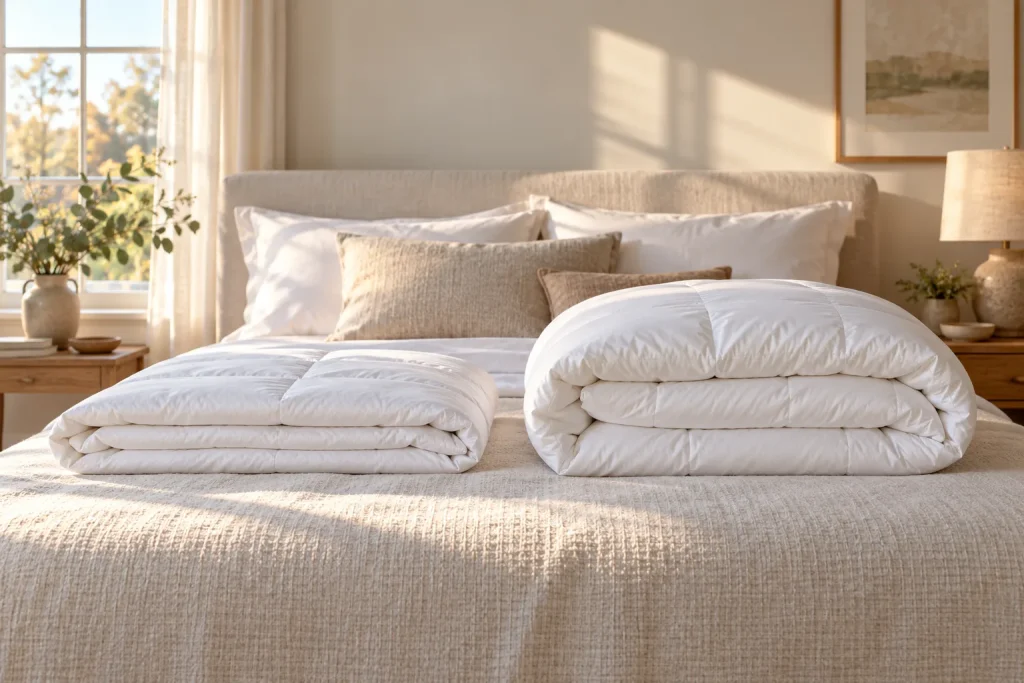
The warmth rating indicates the level of warmth a duvet is designed to provide. It serves as a guide within the respective range – it is not a standardised figure across all manufacturers. At OBB, you’ll find designations such as extra-light, light, medium, mono, warm, duo, extra-warm and 4-seasons, amongst others. Which variants are available depends on the product.
What do the OBB codes mean?
A light duvet is ideal for people who get warm quickly at night or who sleep in a warm bedroom. Models labelled ‘medium’ or similar are a good starting point for those with a balanced sense of warmth. ‘Warm’ and ‘extra warm’ are aimed more at people who prefer more warmth. Terms such as ‘duo’ or ‘4-seasons’ also describe a construction method or combination option; they cannot therefore simply be interpreted as fixed levels on a single scale.
Always check the product specifications for the specific duvet. Materials and constructions vary. A ‘medium’ duvet made from one type of filling may not feel exactly the same as a duvet with the same rating but made from a different filling.
Summer, all year round or winter?
A light duvet may be enough for the summer, especially if your bedroom is warm. An all-season duvet is designed to cover as many nights as possible, but can be a compromise when the seasons vary greatly. Anyone who feels the cold a lot in winter is likely to prefer a warmer option. A four-season solution can be flexible if the individual parts can be used separately or combined – provided the product in question is designed in this way.
| If you … | First, check … |
|---|---|
| you often get too hot at night | lightweight designs and breathable materials |
| you’d like a duvet that will last for many months | Average temperatures and your indoor climate |
| freezes quickly in winter | warmer or mix-and-match styles |
Why weight alone is not very telling
Two duvets of the same weight can provide different levels of warmth. The filling, loft, air pockets, quilting and cover all influence the result. A light down duvet can insulate well; a heavier duvet is not automatically warmer. The article Down or feathers explains the different filling properties.
Your choice in three questions
How warm is your bedroom usually? Do you tend to feel cold or hot at night? Would you like one Duvet for all year round, or several for different seasons? These answers will help you choose from the available Duvets narrow down the options. Only then is it worth comparing the fillings and Ceiling height.
If you’re torn between two temperature settings, base your choice on your usual room temperature rather than a general temperature chart. Sleeping comfort is a personal matter; the product description provides the right guidance to help you make your decision.