



Which detergent is suitable for down pillows and duvets?
The right detergent is gentle on the down filling. Find out what you need to bear in mind when it comes to dosage, mild detergent and fabric softener.
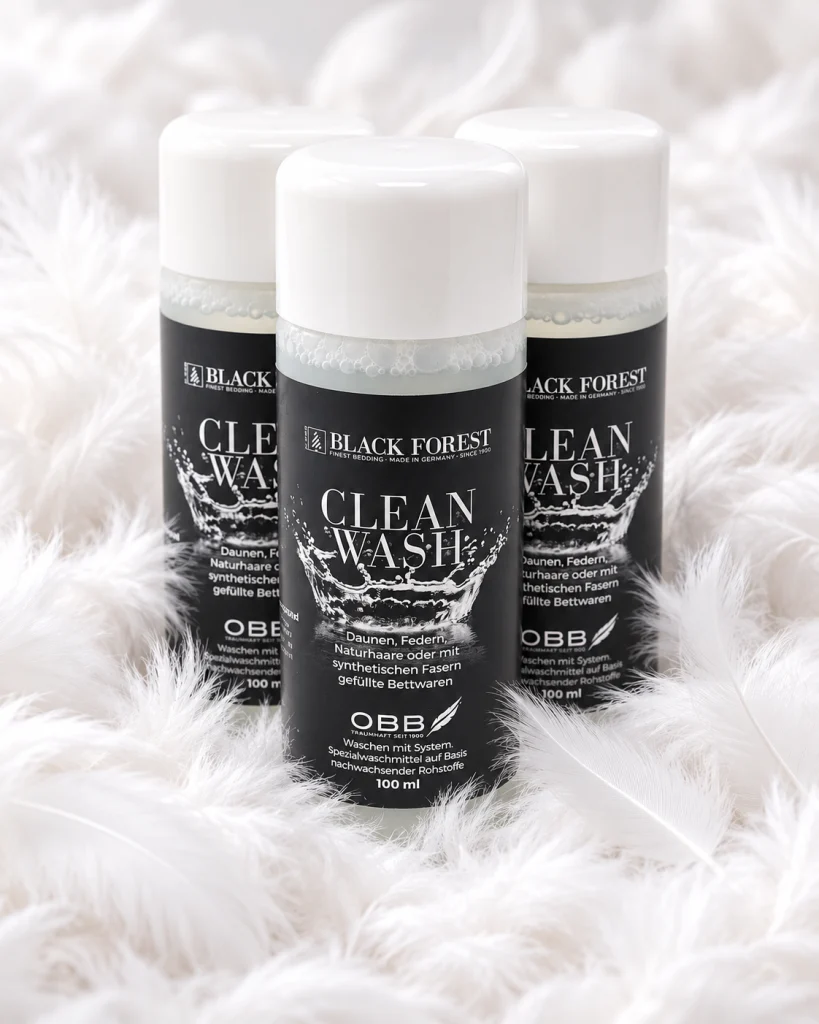
For down pillows and duvets, it is advisable to use a detergent that is specifically suitable for down and feathers. It should clean the filling without putting it under unnecessary strain. The most important check comes first: the care label on the specific product determines whether and how you are allowed to wash it at all.
Why use a special down detergent?
Down consists of fine natural fibres that are designed to retain their loft. A suitable down detergent is formulated specifically for this type of filling. Strong general-purpose detergents, bleach or excessive doses can leave residues or damage the material and the cover. The OBB Down Detergent is a suitable option if your product’s care label states that it is machine washable.
Even with a specialised detergent, the same rule applies: follow the dosage instructions on the packaging. Using more detergent does not automatically make the load any cleaner. In fact, using too much increases the risk of residues remaining in the load.
Would a detergent for delicates or woollens work as well?
Not every bottle labelled ‘Delicate’ or ‘Wool’ has the same composition. Some formulations contain ingredients that are unsuitable for down. You should therefore check the specific formulation and the manufacturer’s instructions. If down is not explicitly listed as a suitable application, a product specifically designed for this purpose is the clearer choice.
You should avoid using fabric softener. It can damage the fine fibres of the down and make it harder for the garment to fluff up. You should also avoid using additional fragrances or care additives, unless the care instructions for the product specifically recommend them.
How to avoid detergent residue
Starting with a sparing amount of detergent, tailored to the water hardness and load size, is the first step. You should also select the programme recommended on the care label and ensure that the detergent is rinsed out thoroughly. If there is still foam or a noticeable detergent residue after washing, an additional rinse cycle may be advisable. Always follow the appliance and product instructions.
Drying afterwards is just as important as washing: lumps and odours can develop in damp filling. You can find a complete step-by-step guide at Washing and drying down pillows. What role Drying balls We’ll explain how this works separately.
Check briefly before buying
Check the label for the fabric type, washing symbol and drying symbol. If you have a large duvet, your domestic tumble dryer may be too small, even if the item is labelled as suitable for machine washing. In that case, professional cleaning is often the gentler option. So, even the right detergent is no substitute for sufficient space or careful drying.
For day-to-day care, it helps to air your bedding regularly in a dry, shaded place. Frequent washing without good reason is usually not necessary. If you’re unsure, check the care instructions for your specific bedding first.