



What is kapok? An explanation of this natural fibre used in duvets and Pillows
Kapok is a plant-based fibre derived from fruit capsules. Find out how it is used in Duvets and Pillows, and what you need to bear in mind when looking after them.
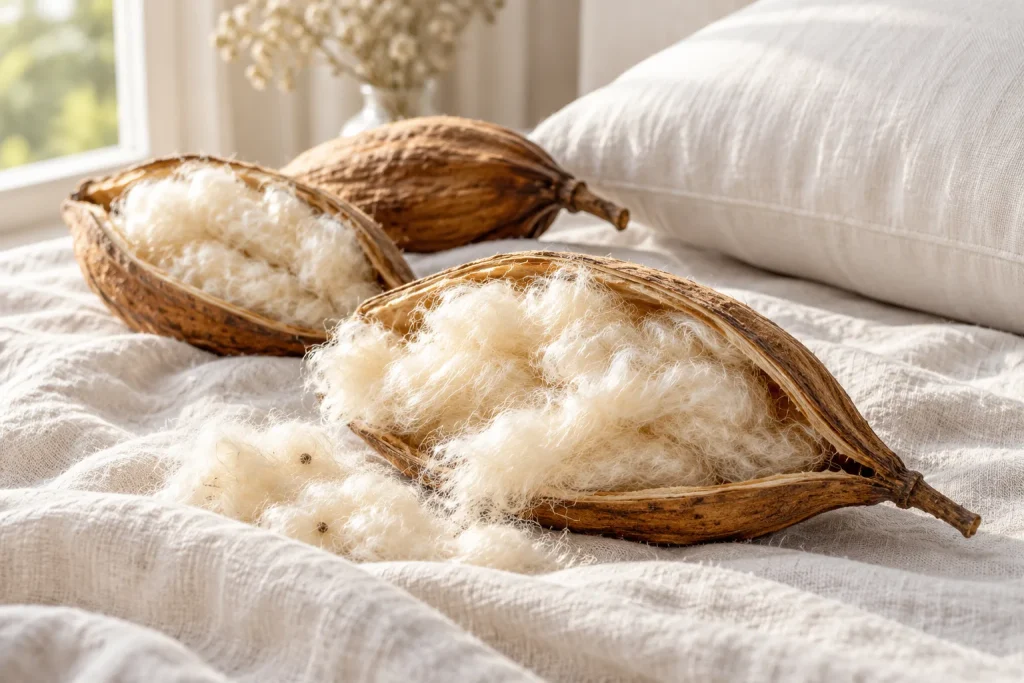
Kapok is a plant-based fibre derived from the fruit capsules of the kapok tree. The fine, lightweight fibres are used as filling material for bedding. Anyone looking for an alternative to down or synthetic fibres may find kapok an interesting option – but should check the specific product and its care instructions.
Where does the fibre come from?
Kapok grows inside the capsules of the kapok tree. After harvesting, the fibres are separated from the seeds and other parts of the capsule and prepared for further processing. The material therefore comes from a plant and is not an animal-based filling. The actual origin and processing of an OBB product are stated in its description or in the company information under Origin & Processing.
The fibre is lightweight and has a smooth surface. However, whether a finished Duvet keeps you warm or a pillow provides support depends on the fill weight, the cover fabric and the construction. No firm guarantee of comfort can be inferred from the name of the material alone.
Kapok in duvets
In a duvet, kapok affects the weight and feel. Depending on how it is processed, it creates a different level of loft compared to down, natural hair or synthetic fibres. The Black Forest ‘Greta’ kapok duvet is an example from the current OBB range. Compare the available sizes, the warmth rating described and the care instructions with your requirements.
A general statement such as ‘Kapok prevents night sweats’ would be an over-generalisation. Room temperature, bedding, clothing and individual sensitivity to heat also play a part. The Guide to choosing the right Duvet will help you Heat level.
Kapok in the pillow
With pillows, it is not only the type of fibre but also the amount of filling that determines how firm and plump they appear. The Black Forest ‘Grit’ Kapok Cushion Available in selected sizes. Whether this filling is comfortable for you depends on your preferred level of support and sleeping position. A plant-based material is not automatically suitable for everyone with allergies; if necessary, seek professional advice to clarify your individual requirements.
How do you look after kapok bedding?
Do not rely on a one-size-fits-all washing rule for all kapok products. The cover, quilting and filling may be manufactured differently. You should therefore read the label on the specific duvet or pillow and follow the washing and drying instructions given there. Gentle airing is often a useful part of routine care; direct, strong sunlight is not necessarily the best option. You’ll find further advice on this in the article Should you put duvets and pillows out in the sun?.
If you want to compare kapok with other fillings, start with your most important requirement: the weight of the duvet, the desired level of warmth, or the support provided by the Pillows. Only then can you make a meaningful assessment of the material.